(No title)
Half the battle to self-determination is ourselves, believing that we can. If self-determination starts with us, that means we must teach and learn to love ourselves. What does that even mean? Self-love means regard for our own happiness or advantage. Not to be mistaken by selfishness, conceitedness or egotism which are symptoms of self-hate disguised as self-love. Unless we learn to self love, we act for others approval and acceptance.
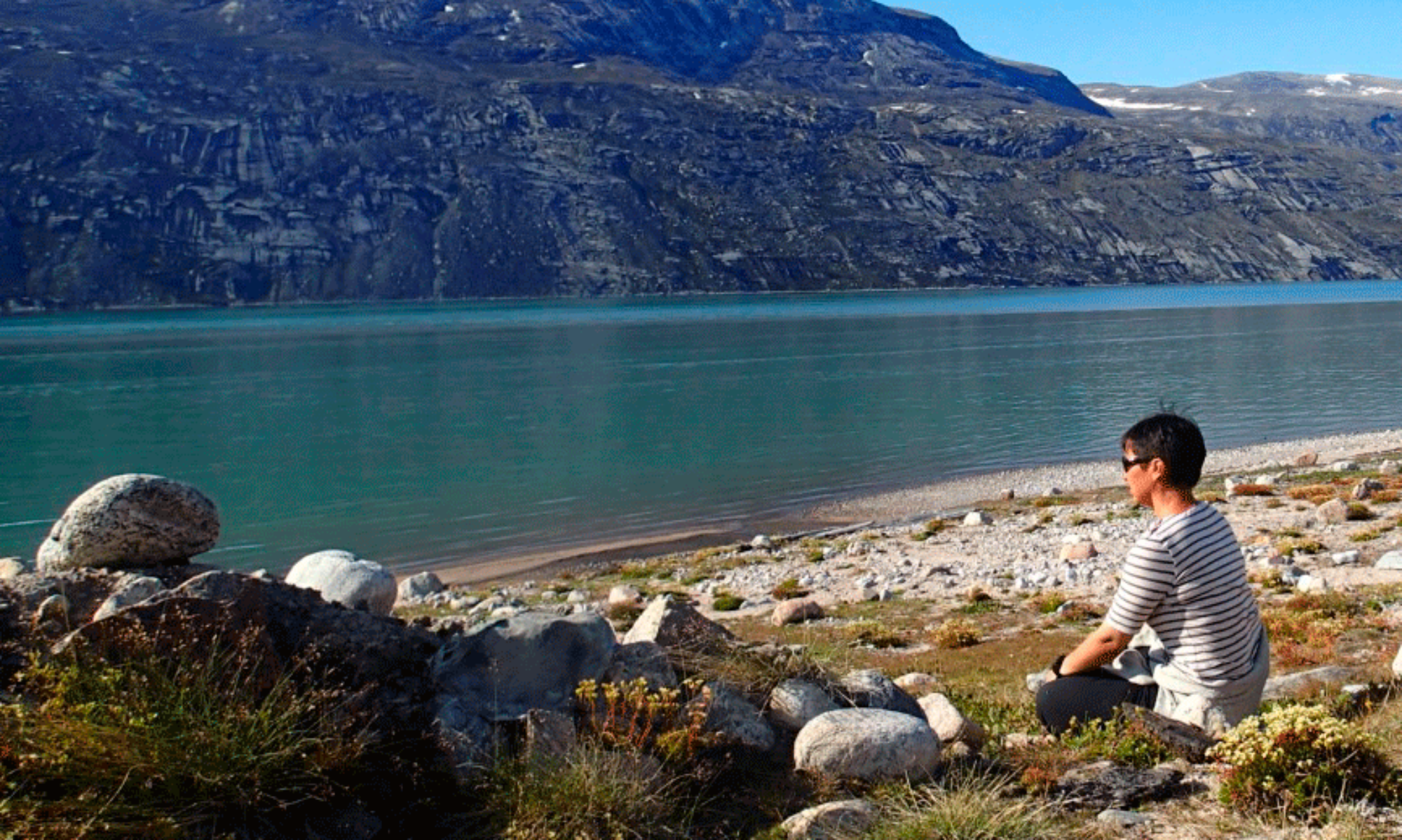
We are truest versions of ourselves when we are connected to the land, in fact our splendor and magnificence can be blinding. There is so much beauty in who we truly are, the loving, kind and kin oriented who people look after each other. We are nuna people.
We are also our truest versions of ourselves when we are with people who make us feel completely safe, who give us the intellectual and spiritual freedom in their presence. We are isuma people.
We are faced, though, with denigration and violence. Not of our own making, however , we now deal with the consequences in our hands. Surfacing as a product of our socialized self-hate, while often witnessing and experiencing trauma inducing conditions no person should be facing.
It is no accident that the impact of residential and federal day schools has resulted in generations of children who feel they have been emotionally neglected, starving for approval and attention! Any little bit of attention, we interpret as acceptance and love. For example, we are so elated with government announcements of spending on our basic needs.
An Inuk child learns to disregard or hate who they are in their many days at school and consumption of pop culture in media. So negative or absent is the image presented to them, that they are conditioned to find relief only in close identification with whiteness, striving to emulate a good white life and abandoning themselves further as they move up the academic ladder facing more scarcity of representation as they go!
The effect is that we retreat into ourselves by becoming inward-looking or cliquee, reasserting an unhealthy identity that we culture police or underplaying even eradicating our own identity. Creating spaces to practice our own culture and identity then becomes uncomfortable, feels fake or trying too hard. Unless, of course we are in our own world, with our safe people.
These coping mechanisms are symptoms of self-hate, of a deep inferiority complex that becomes very difficult to erase or deal with. The Colonial project shows us that it’s working by indulging of romanticizing or co-opting us by defending it.
The manifestation of self-hate takes up so much space within our communities. It is the continuity of this pathology where decisions and actions that deprive us of the chance to make an impact in respect of self-worth, decolonization and reclamation.
As much as people can blame the slow pace of the self-determination transformation agenda in Nunavut, it is equally important to determine the role of inflicted self-hatred as a factor in the process. Being truthful to self-worth takes courage to make us active participants in our decolonization, which will ultimately play a role in the reclamation of a currently fractured Nunavut. Until we create safety in numbers this space is very lonely and isolated. It takes intentional work!
Political systems are configured in such a way that we spend more time worrying about white people, the law and policies that have been created to serve them: who and what is an education for; who and what is an economy for; who are the social systems for; how is success defined. Reacting to white systems, we then find ourselves in a helpless psychosocial ‘space’ which clouds us and distract us from self-advancement.
Our conditioned colonized minds has made us adopt the colonizer’s ideologies, values and lives. French/Tunisian writer Albert Memmi explains “To refuse means either withdrawing physically from those conditions or remaining to fight and change them. … It is not easy to escape mentally from a concrete situation, to refuse its ideology while continuing to live with its actual relationships…. Rejection of self and love of another are common to all candidates for assimilation. … Love of the colonizer is subtended by a complex of feelings ranging from shame to self-hate”. A perfect damned if you do, damned if you don’t scenario, with an internal strife.
Once you see through colonial systems and the power systems that maintain oppression, it is very difficult to unsee them. By staying silent you feel coopted and complacent, intellectually oppressed, suffocated and desperate to come out and breath.
White or colonial systems are coercive. A very strong force that limit our identities, intellect, bodies and lives. Colonialism is motivated by the promise of plundering the environment and subjugating populations, it is not our path to salvation.
The first step is to shed light on the situation. Once we recognize it, we can start to deal with it, reject it’s false narrative of our inferiority that feeds self-hate that disempowers.
In order to practice self-love Bell Hooks writes “One of the best guides to how to be self-loving is to give ourselves the love we are often dreaming about receiving from others.”
By imagining ourselves and finding safe spaces that are completely intellectually and spiritually safe, we can start asserting ourselves and practicing self-love. We need safety in numbers in key strategic spaces. We are worth staying as nuna and isuma people! After all, look at the intellect that has made us who we are, where we are in this stunning landscape!